Jev for marketing and lead scoring
Jev helps marketing teams with the judgment calls that sit between data and action: does this lead fit the ideal customer profile, does this reply show buying intent, does this draft follow the brand guidelines. It returns typed answers with probabilities that your code can sort and threshold, but it does not write emails, posts or campaigns (System One).
Where Jev fits in marketing
TypeSafe's use-case map lists lead generation directly: match company profiles, executive bios and inbound messages to an ideal customer profile, score industry fit and company maturity, detect buyer relevance, pain points and purchase intent, and prioritise and route leads (Example use cases). The same page covers pulling purchase intent and product interest out of sales notes and reviews for forecasting, and moderating communities and SDR conversations.
Two properties make this practical at list scale. All questions about one lead go in one request and run in parallel (Speculative fan-out). Pricing is $0.042 per million input tokens, with output free (Models). See Jev pricing.
Lead scoring with composite scores
Don't ask one "how good is this lead?" question. TypeSafe advises splitting a judgment into independent factors and weighting them in code, so you change weights rather than rewrite prompts when priorities shift (Primitives).
The composite scoring pattern does exactly this for resumes: four Score questions, each normalised to 0 to 1, then combined with different weights for different roles (Composite scoring). For leads, the roles become segments or products. One weighting might favour company fit, another buyer seniority.
Then use confidence to decide what happens next. TypeSafe suggests acting automatically at high confidence, taking care in the middle, and routing low confidence to a person (Confidence). A low-confidence "strong fit" is a good one for a rep to check by hand.
If you have outcome data, Jev answers can become model features. The autoresearch cookbook turns free text into numeric features for a CatBoost regressor (Autoresearch feature discovery), and the use-case map describes combining such features with structured data (Example use cases).
Question designs for marketing
- Score, ICP fit: levels from "outside our market" to "matches every ICP criterion", each described in words (Score).
- Score, role seniority: individual contributor, manager, director, executive, owner.
- Noul, buying intent: "Does
`reply.text`ask about pricing, a demo or a trial?" One condition per Noul (Noul). - Choice, reply type: interested, not now, not the right person, unsubscribe, other. Add
otherwhen the list may not cover everything (Primitives). - Noul, guideline check: "Does
`draft`make a claim about a competitor?" TypeSafe lists checks against writing guidelines as a use case (Example use cases).
Limits to plan for
- Jev does not write outreach, posts or copy (Jev with coding agents). Pair it with an LLM or a writer.
- Headcount, revenue and funding are numbers. Compare them in code, since Jev is weak at numeric comparison (Jev 1.13 jaggedness). Dates are the same: extract in Jev, compare in code.
- Jev reads instructions literally, so spell out what "good fit" means in the criteria (Jev 1.13 jaggedness).
- A predicted score is not a conversion. Calibration holds across groups, not for any single lead (System One). Check scores against real outcomes before you let them drive spend.
- Jev is not fine-tuned on your data. You adapt it through the state and the wording of your questions (Models).
More projects are in Marketing and social. For how Jev differs from a chat model, see Jev vs. LLMs. For setup, see How to use Jev and What is Jev?
Projects doing this
 Marketing, sales & socialClay JEV People RankerPulls Clay people-search results and uses Jev Choice and Noul questions to qualify role fit before enrichment.GitHub · promptgtm-shared
 Marketing, sales & socialheyreach-jev-botScores LinkedIn outbound for HeyReach from signals, running on Jev.GitHub · ★ 2 · matthew004-web
 Marketing, sales & social700 leads scored in 40 secondsScores 700 leads and personalised messages for predicted performance in 40 seconds for $0.09, as reported by the author; predictions are not observed results.X post · Romàn
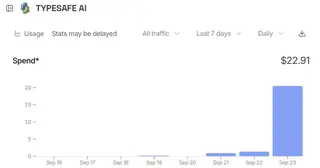 Marketing, sales & socialOnly 47% of leads fit the ICPScreened 605M tokens of live campaigns with Jev and found only 47% of leads fit the ICP.X post · AronTomorrowLab
 Marketing, sales & socialWhich outreach signals book demosJev read thousands of outreach messages to find the signals that booked demos.X post · Pierre-Eliott Lallemant
 Marketing, sales & socialCall CoachA local sales-call assistant that asks Jev after each sentence what the rep should do next and shows a confidence-aware cue.GitHub · ZeroGoldMarketing, sales & socialNotraA marketing analytics platform that uses Jev decisions to track whether AI answers mention your brand.GitHub · ★ 219 · usenotra
 Marketing, sales & socialvibecheckA Chrome extension that adds Jev feedback to the X composer so you can review a draft before posting.GitHub · ★ 47 · RafalWilinski
 Marketing, sales & socialTestimonial minerFinds customer praise in a Gmail inbox and collects the sender's own words for review, grouped by product.GitHub · AppIt Studio
 Marketing, sales & socialScanning Reddit for leads with JevAn honest report on two days of building a Reddit lead scanner with Jev, and getting no replies.X post · Yannis
Questions
Can Jev write marketing emails or social posts?
No. Jev does not generate text. It scores, sorts and checks content written by a person or an LLM.
How is Jev lead scoring different from asking an LLM?
You define the answers in advance and get probabilities back, so scores are typed and can be sorted, weighted and thresholded in code. You still decide the criteria and the weights.
Does a high Jev score mean a lead will convert?
No. It means the lead text matches the criteria you wrote. Whether that predicts conversion is something to test against your own outcome data.
Can Jev read LinkedIn profiles or CRM records?
It reads whatever text or JSON you send as the state. Collecting that data, and doing so within each platform's terms, is up to your own code.
What about company size or revenue filters?
Do those in code. TypeSafe notes jev-1.13 is weak at numbers and comparisons, so keep numeric rules deterministic and give Jev the semantic judgments.
More guides: What is Jev?Jev pricing and API costJev vs LLMs: when to use whichHow to use Jev: a quickstartJev and MCP: using Jev as a Model Context Protocol toolHow to use Jev with Claude CodeJev in an agentic harness: where it fits in an agent loopJev for orchestration: routing requests, models and skillsJev as a judge: evaluating LLM and agent outputsJev for SEO and GEOJev for ads and ad reviewIs there an open source Jev?Can you fine-tune Jev?Designing questions for JevWhat is RLCD?Jev statistics